When Ryanair changed our departure flight from Torino to Sevilla it was a bit of disappointment that quickly turned in dealignment. We will have another day in Sevilla and we could use that day for visiting the surroundings.
Jerez de la Frontera was not on our list originally but with the change of plans it turned out to be the best decision ever to visit this city.
Situated an hour drive to the south from Sevilla, Jerez is one of the corners of the so called Sherry Triangle province notable for its sherry wine production.
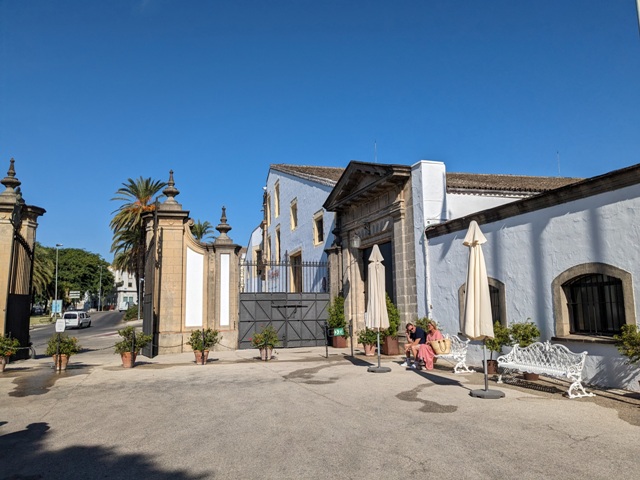
We are not much of sherry wine lovers, but we are very much interested in food and wine production in general, so we thought that a visit to a sherry winery would be a nice experience. And it truly was.
After corona pandemic not much of the wineries continued with the visits to the production, or maybe it was off season that we decided to travel, but only few wineries had a schedule that was acceptable to us. And the price for the touring and a short tasting, given the fact that we a) have a child (responsible parents) & b) had to drive back (responsible adults).
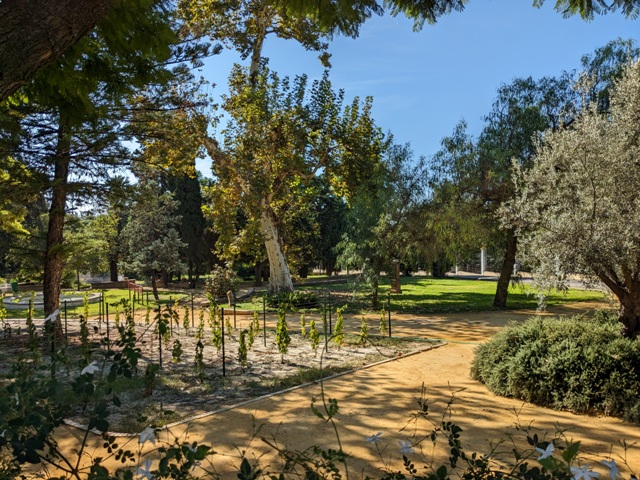
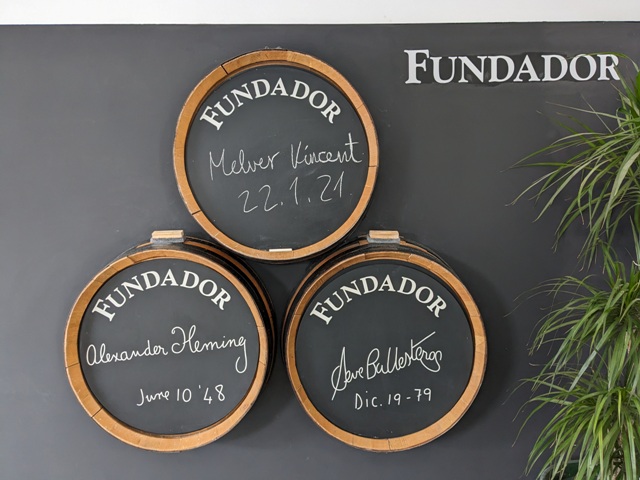
Our lovely guide at the Bodegas Fundador gave us a detailed tour of their storage facility and an interesting insight into some of their brand products. She even left a huge impression on M, because he remembered her as to be quite when the lady in red speaks.

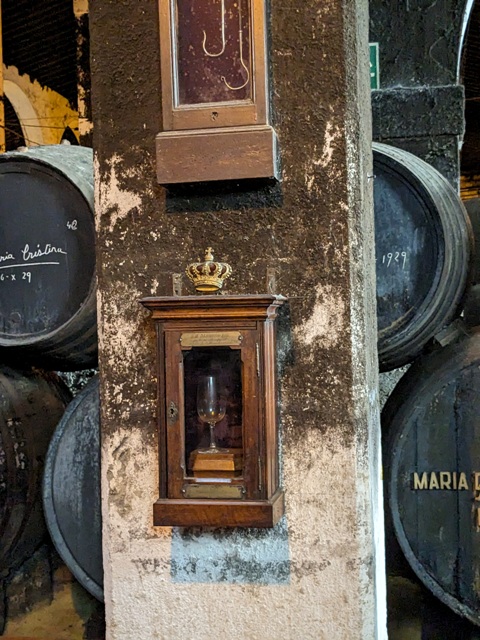
With several vineyards, a vinification plant, brandy and sherry aging and production cellars, Bodegas Fundador is the oldest winery in Jerez, founded in 1730.
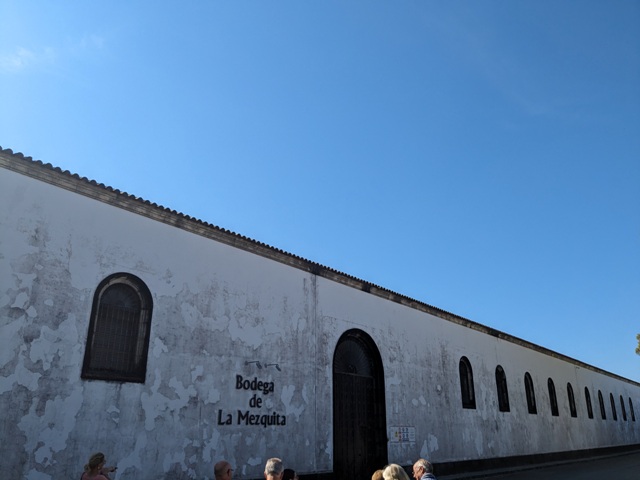
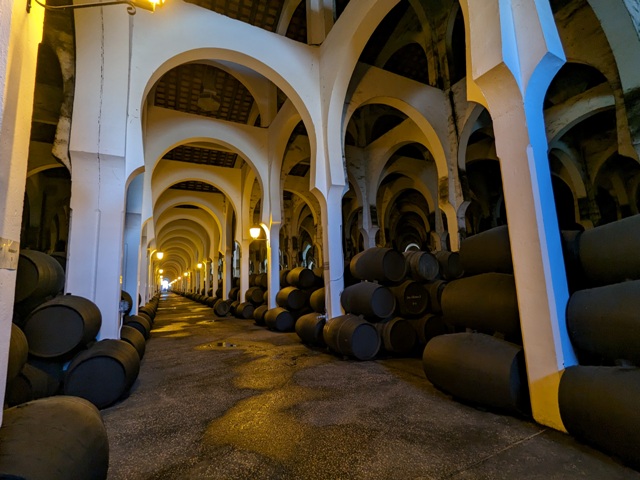
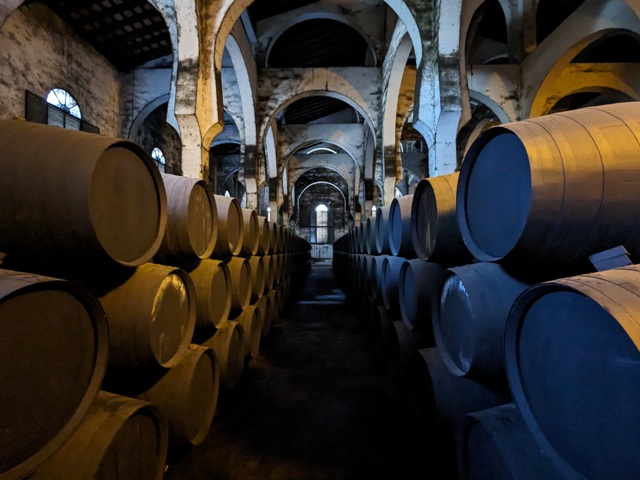
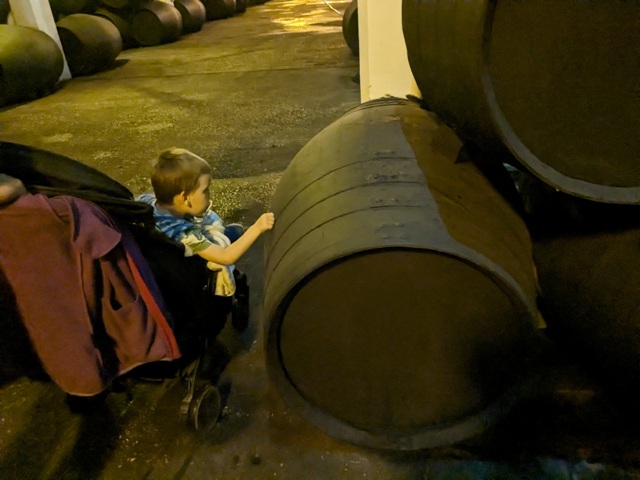
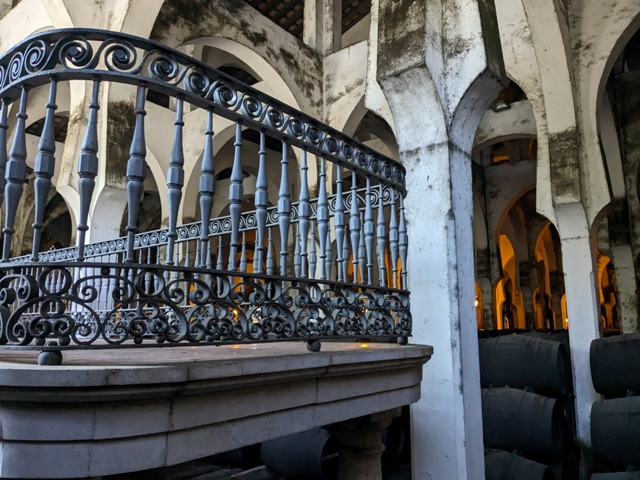

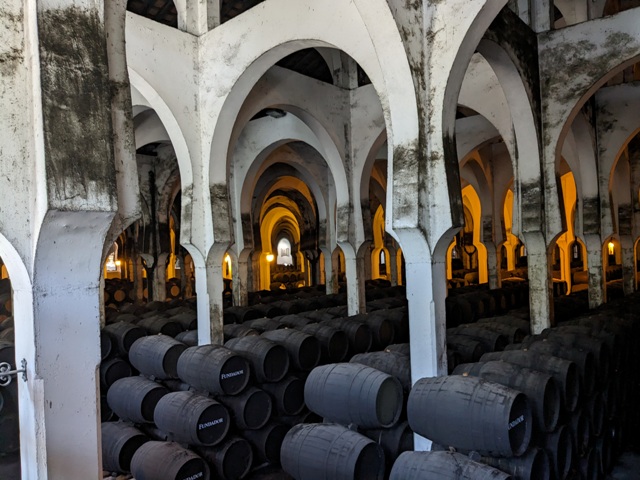
They have been the Royal supplier of the sherry wine for the English court and they have been the major sponsor for the Latin Grammys held in Seville later that November in 2023.
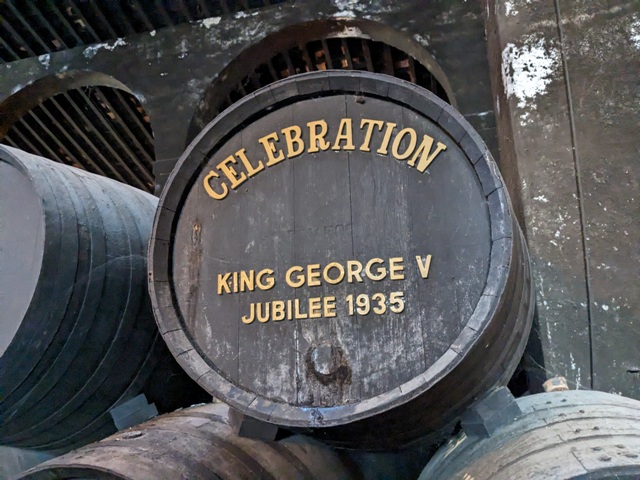
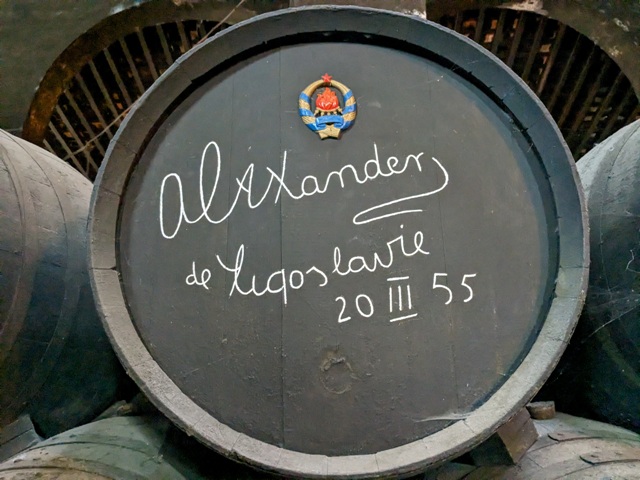
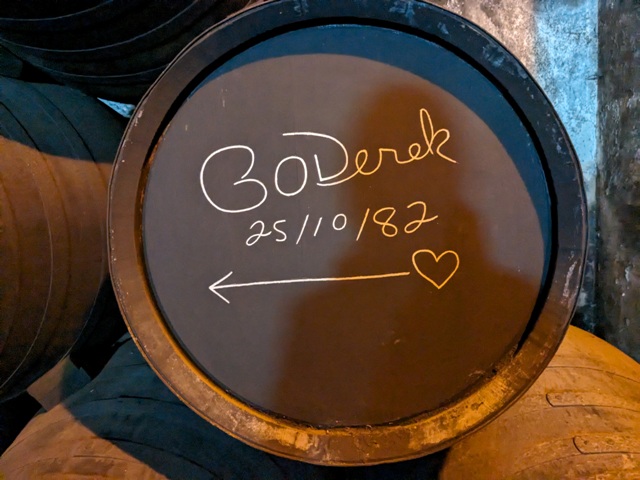
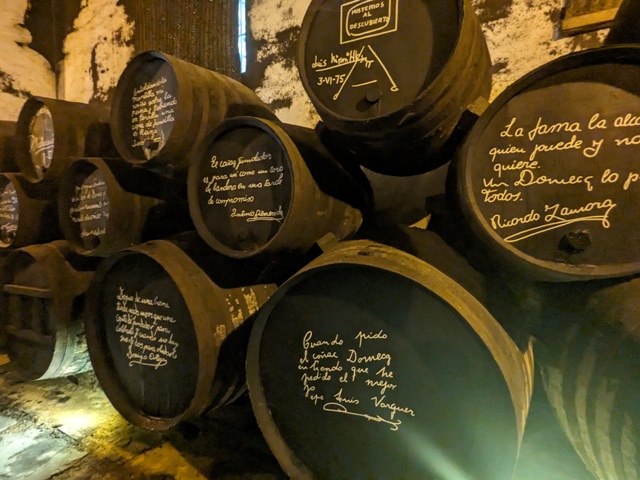
To understand a bit more about the connection between Spanish wine production and a British market place the best way to do that is to explain the origin of the name of the city.
Jerez de la Frontera was once part of a Moorish kingdom, and siting between the border of Moors and Christians if quickly got the name la frontera = frontier / border.
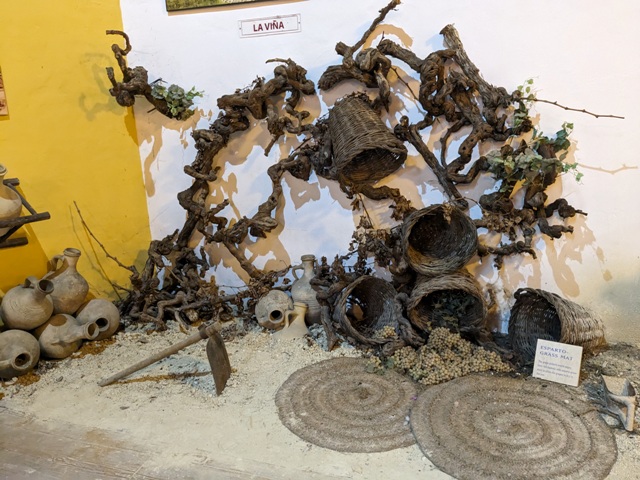
During the Moorish period, when the town was called Sherish, in late 9th century according to Muslim religious laws the second Caliph of Córdoba ordered destruction of the vineyards.
However, the people of Jerez continued to cultivate vitis and produce the raisins that were used to feed the empire’s soldiers. For that reason Caliph spared two-thirds of the vineyards.
With the change of the political system, the wine production started one again and it even reached as far as North of Europe, soon to declared the fines wine in the world and the most exported Spanish product to England. English wool for sherry wine, was the deal at the time. And that was it. Weirdly, next to the Ibiza, sherry wine is one of the most beloved Spanish items among Englishmen. To that extent that most of the people on our tour were from UK.
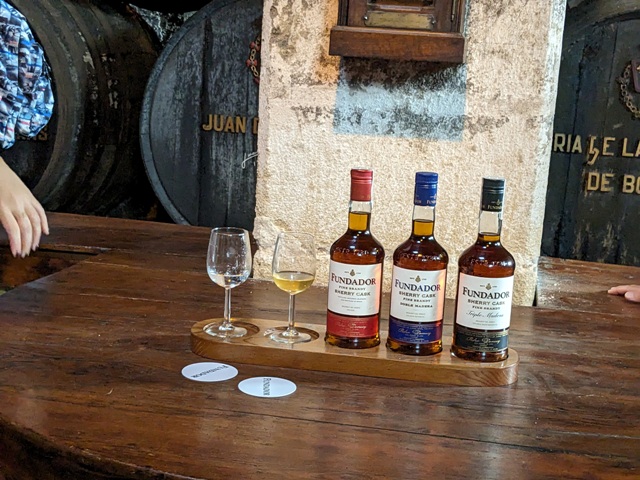
The sherry wine is made from only three sorts of white grapes called Palomino, Moscatel and Pedro Ximenez. The production starts as the normal wine making by extracting the must that is fermented in stainless steel vats. The sherry is than fortified using destilado, made by distilling wine and stored in oak casks to mature and age.

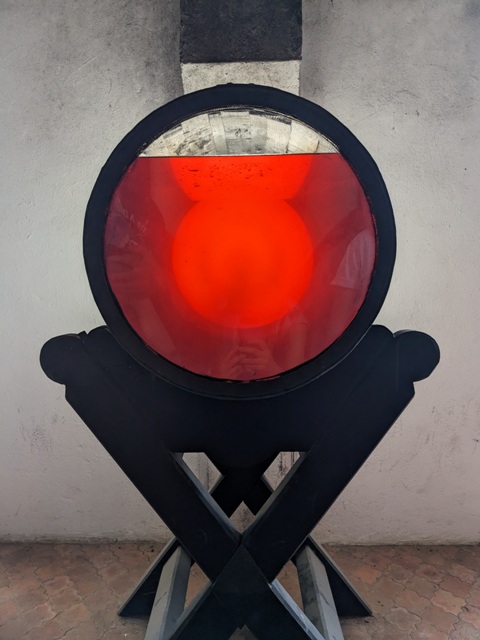
The barrels are half filled leaving the space for the natural yeast (flor) layer to be created that protects the wine from the oxygen/air preventing it from becoming oxidized.
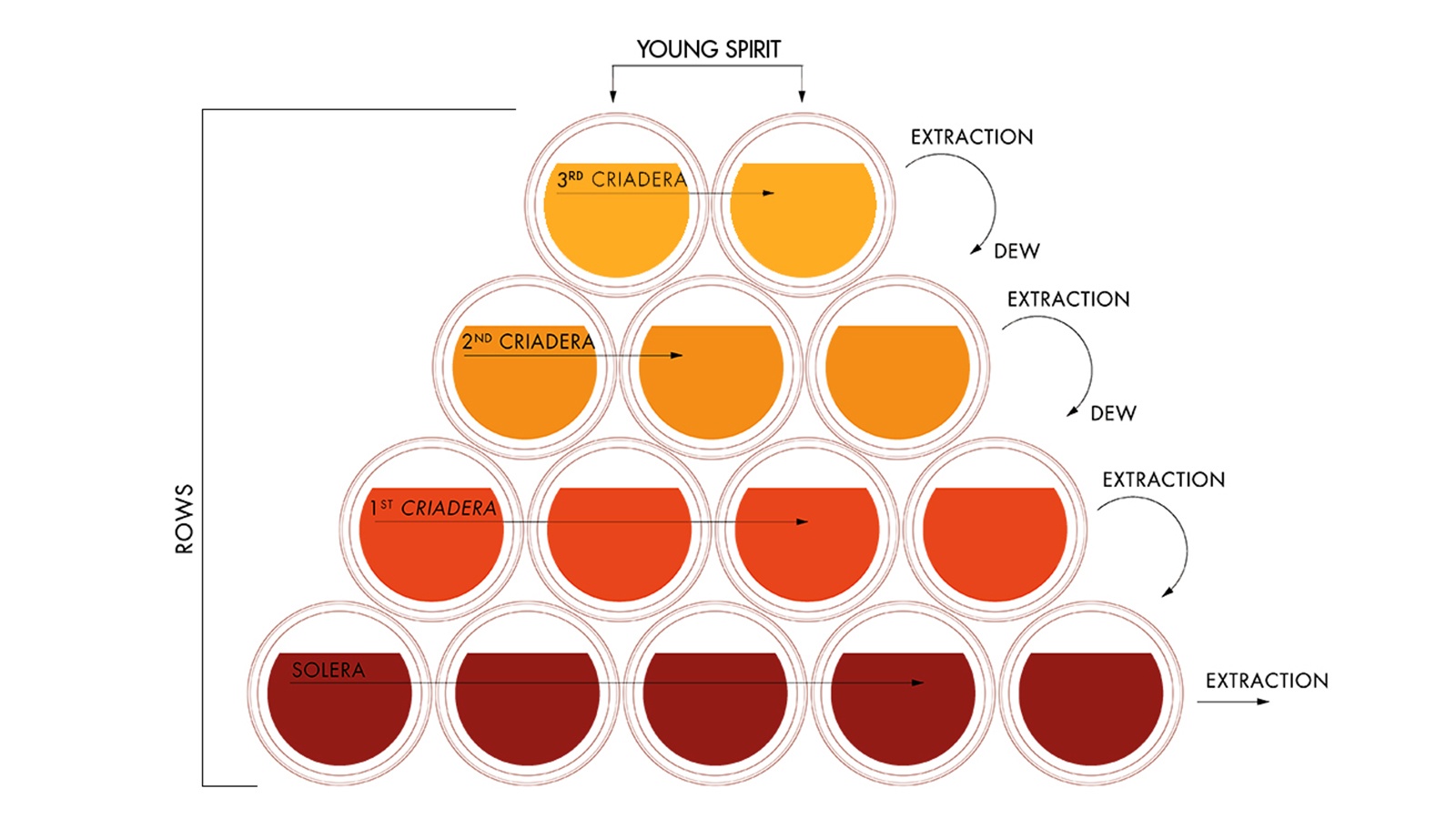
Using a special fraction system called solera (fractional blending in such a way that the finished product is a mixture of ages, with the average age gradually increasing as the process continues over many years) the sherry is aged and blended to be finally bottled as a unique blend of several aged wines with some soleras dating back hundreds of years.



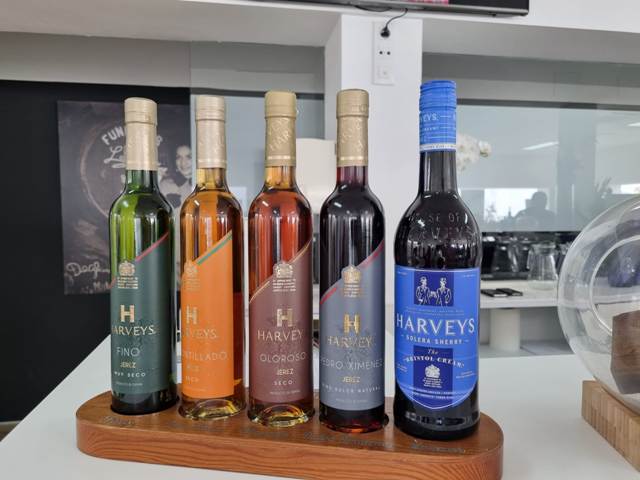
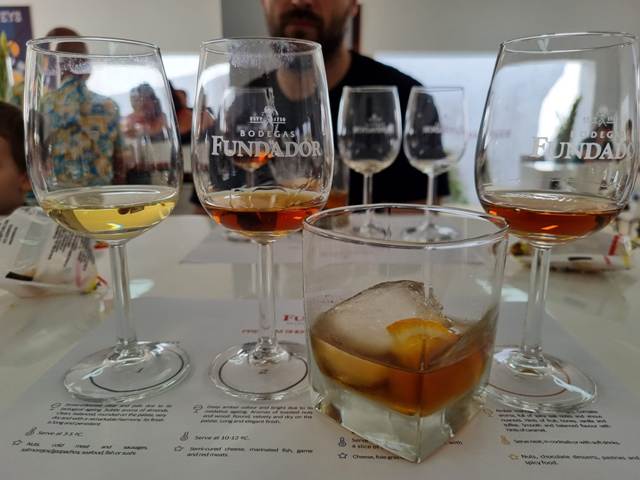
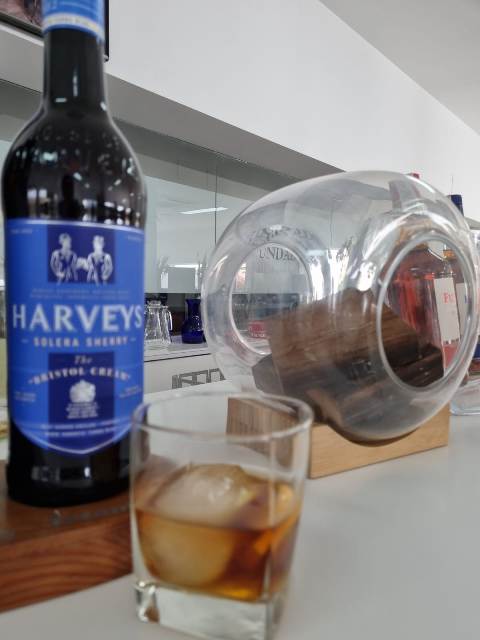
After the detailed visit to the facility we had the chance to try some of the sherries produced at the winery. Our favorite was definitely the Harveys Bristol Cream, created in 1882 by John Harvey II and his brother Edward in Bristol.
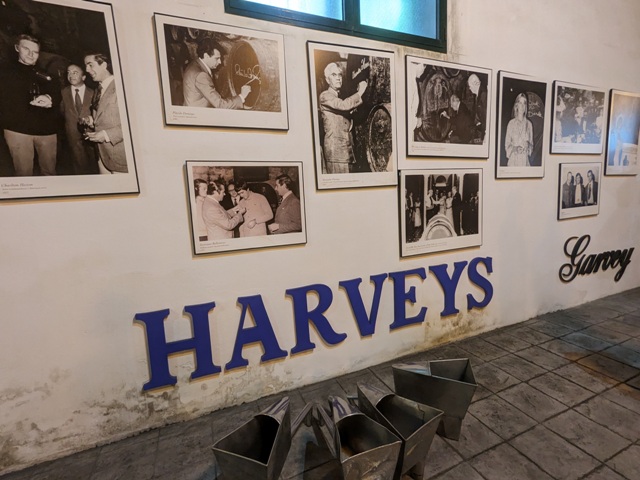
Harvey’s Bristol Cream is the result of a carefully selection of over 30 blends of Fino, Oloroso, Amontillado and Pedro Ximenez grape. Aged in American oak casks using the traditional system of soleras and criaderas it is bottled in a catchy blue glass bottle created by the Bristol merchant and potter, Richard Champion somewhere in the late 18th century.
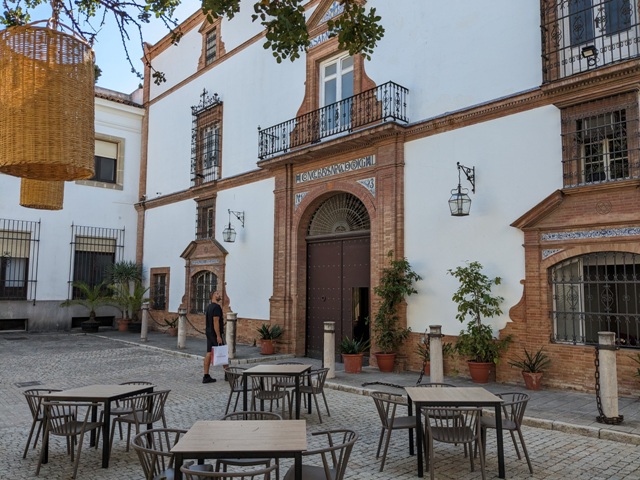
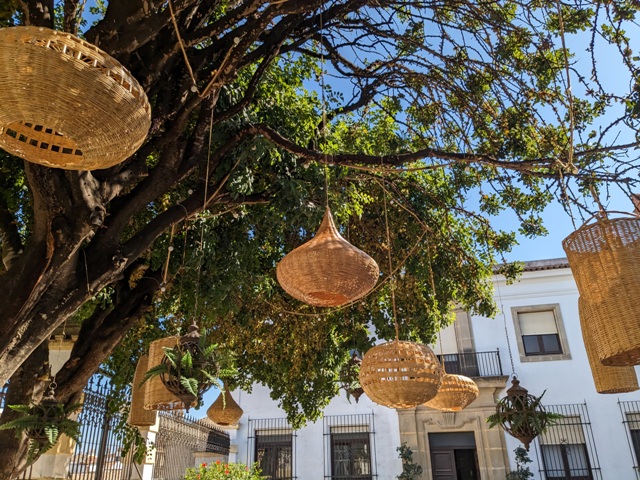

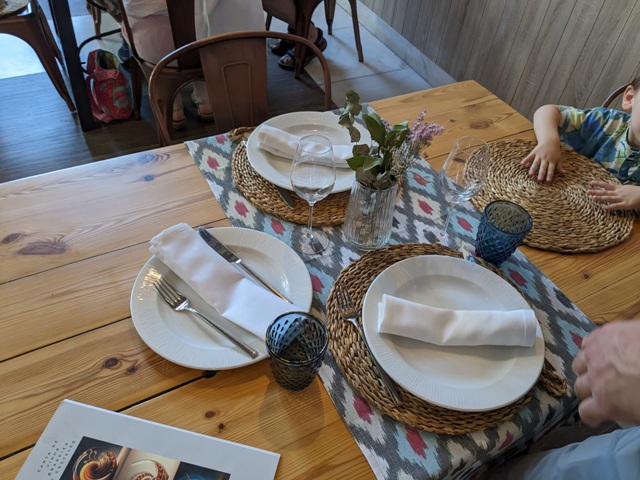
Together with the many from our tour group (I guess I wasn’t the only one with the bright idea) we had a fantastic few course meal at the beautifully set restaurant at the back of the winery.

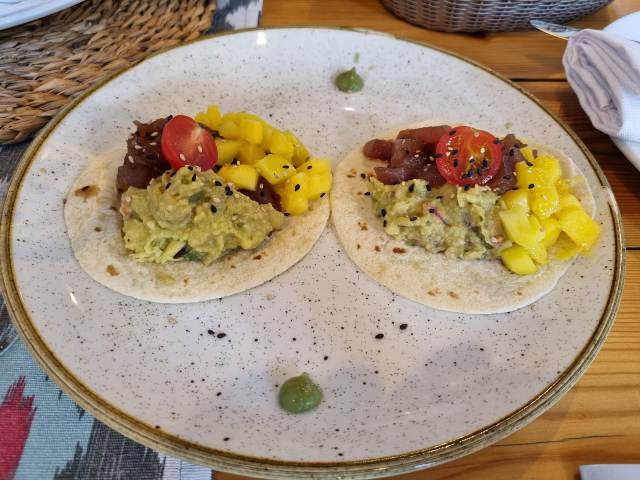
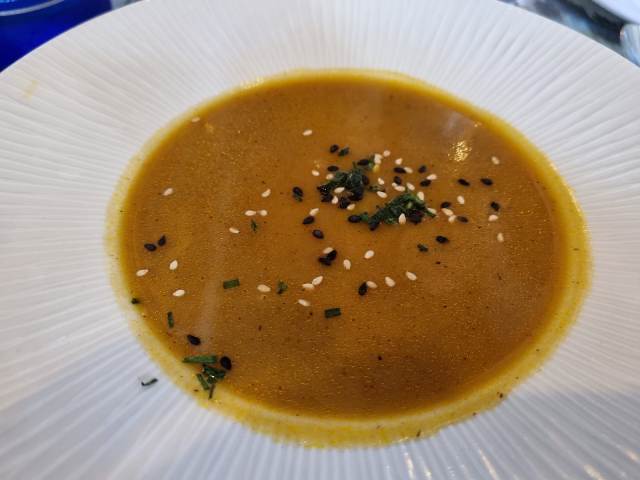
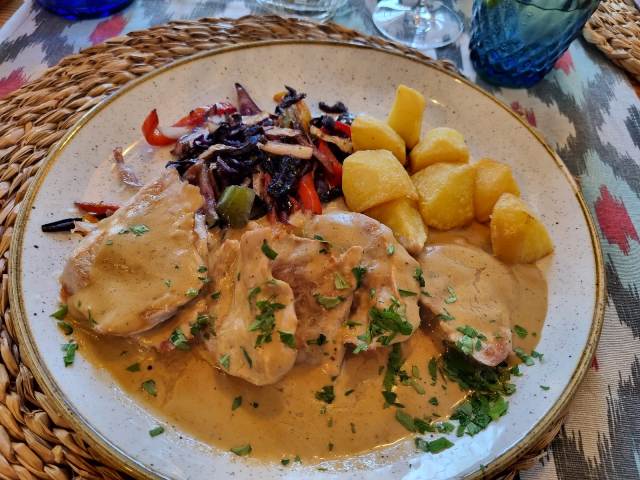
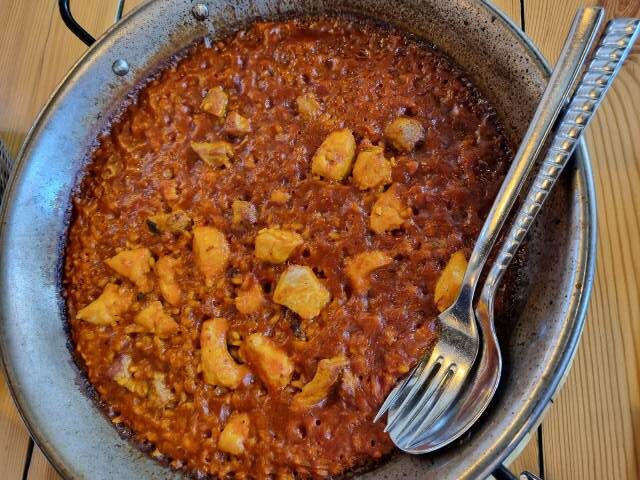
After a delightful visit to the winery, Harveys sherry purchase of course and a delicious lunch, we ended the day on the beach!
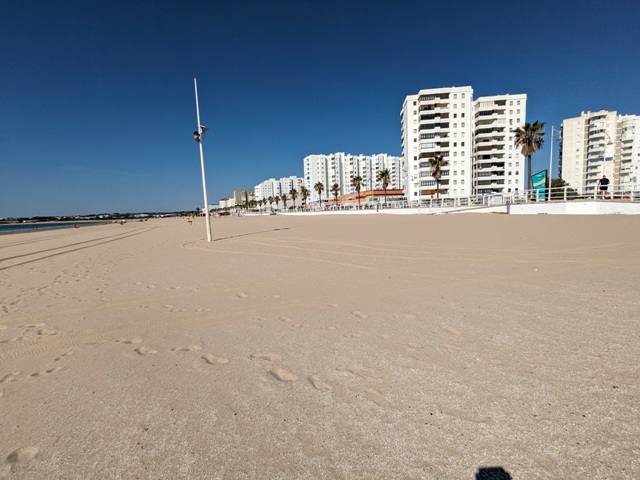
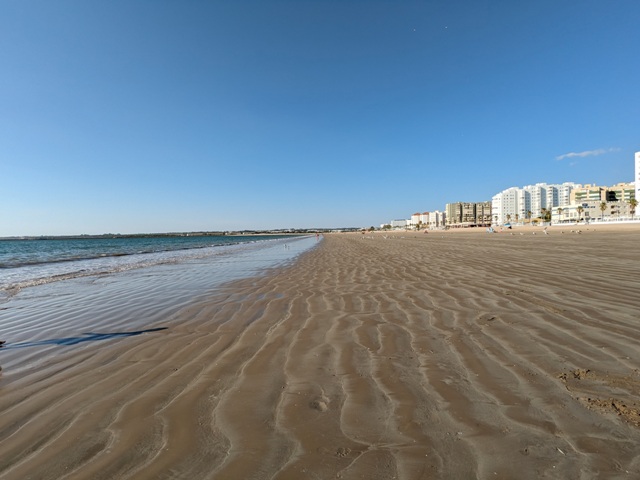
Playa de Valdegrana in the Bay of Cadiz, was a perfect place to refresh in the warm sea and play in the sand.

The long sandy beach was almost deserted so it was truly joyful to spend some hours running barefoot and soaking up in the sea with no one, but the little and the big one in sight.